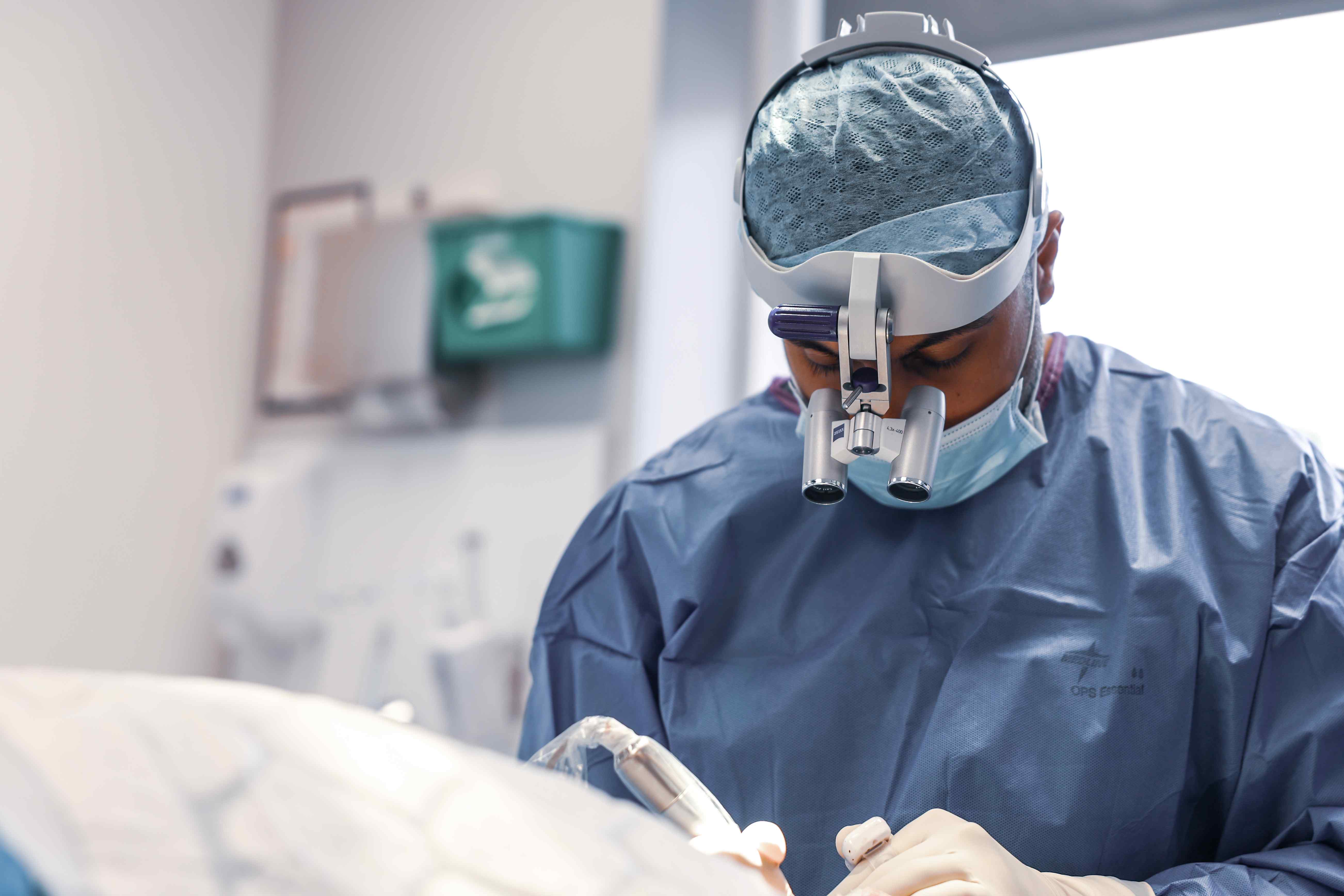
FUE hair transplant

Medically reviewed by
Dr. Raja
Hair Transplant Surgeon

Understanding Female Hair Loss: Causes, Diagnosis, and Treatments
Female hair loss is a complex condition that can affect women at any stage of their lives. This condition often presents as a widening part, gradual thinning, or a loss of overall hair density, and it can be a significant source of distress for many. Fortunately, there are many solutions to addressing female hair loss, including both surgical and non-surgical options, to suit a range of needs.
Dr Raja Hair Restoration is One of the Top Hair Loss Clinics in the World. Dr. Furqan Raja and Dr. Khan, two of the country’s leading hair restoration experts, lead the practice.
Dr. Raja is a hair restoration expert who specialises in many treatments, including those for female hair loss. He is a Member of the Royal College of Surgeons, the General Medical Council (GMC), the International Alliance of Hair Restoration Surgeons (IAHRS), the British Association of Hair Restoration Surgery (BAHRS), International Society of Hair Restoration Surgery (ISHRS) and he has helped thousands of patients across the country restore their natural growth and scalp health. He teaches and trains other doctors, demonstrating his dedication to advancing the surgical discipline of hair transplant and active involvement in the field.
To schedule your consultation with Dr.Raja, please contact our office online. Alternatively, you may also call any of our offices to schedule an appointment over the phone:
About Female Hair Loss
Female pattern hair loss (FPHL), also known as female androgenetic alopecia, is one of the most prevalent causes of hair loss in women. FPHL is characterized by the gradual miniaturization of hair follicles, especially in the crown. The prevalence of FPHL increases with age, and it affects approximately 12% of women between the ages of 20 and 29 years old, to over 50% of women over the age of 80. While the precise cause of FPHL is unclear, evidence suggests that genetic, hormonal, and environmental elements contribute to its development.
Hormonal Changes
Many hormones can affect the growth and density of your hair. Many women experience hair loss during times of change, such as menopause. During this time, there is an increase in androgens and the cessation of estrogen production in the ovaries, which can directly affect your hair follicles. This includes higher levels of hormones like DHEA, testosterone, and DHT. The body changes DHEA into testosterone, which is then converted into DHT. This hormone causes hair follicles to shrink.
Medications
Medications may lead to hair loss in certain women, including chemotherapy, birth control, thyroid medications, antidepressants, and more. Often, they disrupt the hair cycle by causing hair growth to slow or causing hair to shed. For some patients, discontinuing the medication, if that is a safe option, can restore their natural hair growth and hair cycle.
Medical Conditions
Several medical conditions, such as autoimmune disorders, inflammatory conditions, prolonged infections, and certain illnesses, can trigger hair loss. These conditions can halt the hair growth cycle or damage hair follicles, leading to a gradual decline in density and growth.
Nutritional Deficiencies
Your diet plays a large role in your health and can directly correlate with the structure and growth of your hair. The most common nutritional deficiencies that lead to hair loss include:
· Iron
· Zinc
· Niacin
· Fatty Acids
· Selenium
· Vitamin D
· Vitamin A
· Vitamin E
· Folic Acid;
· Biotin
· Amino Acids and Proteins
· Antioxidants
Common foods commonly contain many of these elements, but many people are either unaware of their importance or do not consume adequate amounts to support the health of their hair. A poor diet or restrictive habits can lead to depletion of these essential nutrients from the hair, causing gradual brittleness, breakage, and loss.
Stress
Chronic stress can cause hair loss in many patients. This is because when your cortisol levels rise, the stress hormones affect the hormonal secretions of a cluster of cells beneath the hair follicles known as the dermal papilla. These cells secrete GAS6, which can activate the stems of your hair follicles and regulate the anagen phase of the hair growth cycle. Elevated stress might limit the release of GAS6, keeping your hair follicles in a resting state. As a result, the body is unable to replace hair as fast as it sheds.
How Dr. Raja Diagnoses Female Hair Loss
During your consultation, Dr. Raja will help determine the root cause of your hair loss and plan the most effective treatment for restoring growth and density. He will meet with you individually to converse about your medical history, current medications, and scalp concerns. Dr. Raja will also perform a physical evaluation to assess the condition and health of your scalp and analyze your current hair loss patterns.
To schedule your consultation with Dr.Raja, please contact our office online. Alternatively, you may also call any of our other offices to schedule an appointment over the phone:
· London: 3333355868
· Manchester : 3333355868
· Birmingham : 3333355868
· Leeds: 3333355868
Available Treatments for Female Hair Loss
Dr.Raja’s treatments include medications, topical therapies, and more. During your consultation, he will evaluate your medical history and scalp conditions to determine the most effective and appropriate treatments for you.
Medications for Hair Loss
We offer several minoxidil products to slow hair loss and encourage new growth. We carry this medication both orally and topically, with the topical solution available in both liquid and foam forms. This medication shortens the telogen phase of the hair growth cycle, prematurely forcing hair follicles into the anagen phase to increase length. This results in a longer hair growth period and improved hair thickness.
Platelet-Rich Plasma
Platelet-rich plasma (PRP) harnesses the regenerative properties of your blood to stimulate and promote new hair growth around the scalp. PRP contains numerous growth factors and proteins that each play a significant role in stimulating hair growth through cell proliferation, differentiation, and angiogenesis.
We are the only practice in the UK offering dual-spin PRP, which allows Dr. Raja and his team to obtain a larger amount of plasma and platelets.
Candidates
You may be a candidate for our female hair loss treatments if you experience thinning or shedding around various areas of the scalp, such as your hairline or crown. You should be in good general health and hold realistic expectations regarding your results. You should also be a non-smoker or willing to quit using nicotine entirely. Dr. Raja will determine which treatments you may qualify for during your consultation, once he assesses your scalp health and identifies the root cause of your hair loss.
Cost of Treating Female Hair Loss
The cost of treating female hair loss can vary depending on the type of hair loss treatment that Dr. Raja performs, the root cause of your symptoms, and the number of sessions in your treatment plan, and several other factors. Once Dr. Raja creates your treatment plan, he will provide a comprehensive cost estimate.
To learn more about the cost of your treatment, please contact our office online or call any of our other locations directly.
FAQ
What causes hair loss in women?
Several factors can contribute to female hair loss, including various types of alopecia, hormonal fluctuations, nutritional deficiencies, medication side effects, medical conditions, and even stress. During your consultation, Dr. Raja can help you determine the root cause of your concerns.
How long will it take to see improvements after my female hair loss treatment?
The time it takes to see improvements will vary depending on the type of treatment you undergo and the extent of your hair loss.
Will my hair loss treatment be painful?
While certain treatments may cause discomfort during your recovery, Dr. Raja’s treatments are considered by his patients to be highly tolerable. If you are more sensitive to pain or have any worries, we recommend discussing them with Dr.Raja.